Search This Blog

My Autumn Weather

Sunday, 10 May 2009

Rosa Ecae Golden Chersonese


There's a lot of sun in this Golden Chersonese rose shrub with its fern like foliage and golden rich yellow flowers, similar to that golden yellow of Forsythia. This rose is a hybrid between 'Canary Bird' and R. ecae

On a bright sunny day, it glowed with a golden hue that every picture looked jaundiced.


According to the book, Wild and Old Garden Roses; this rose comes from Afganistan and was brought to the UK in 1880 by Dr J.E.T. Aitchison who served as an army surgeon in the Afghan war of that time. He named it after his wife's initials E.C.A.

According to the Ultimate Rose book; Chersonese was a Greek name for a place now better known as Gallipoli. The Golden Chersonese was apparently a legendary place of wealth and beauty.

In mid spring, the shrub is smothered with deep golden yellow blooms with a sweet fragrance on reddish graceful arching branches.The blooms fades to a softer and lighter shade . This shrub rose matures to a height of 2 meters (6 feet tall) with about the similar side spread of 2 meters (6 feet wide) sideways.

This is certainly the perfect shrub for brightening dark corners of the garden. I used it as a hedge at the far end of the garden to lighten up a drabby shaded area and it worked really well.
I find the best positioning is where the breeze can bring the strong sweet fragrance into the sitting area of the garden, while pottering or sitting back enjoying the warmth from the mid spring sun at the same time inhaling the wonderful scent in the air.

This is a once blooming rose that began opening its blooms in mid spring about the same time with Glory of Edsell
Other early bloomers that opens the door to the rose season early this time of year includes Sericea Heather Muir, Sericea Pteracantha and plenty other wild rose species.


____________________________________________________________________
Copyright © Rosesarerae All Rights Reserved All the contents in this blog are copyright protected and digitally traceable.

To Mum With Love


What is it like to wake up in the morning to see first roses in bloom with mum's name written all over it and she's away?

Well, I went into melancholic mode. I miss her presence, her hugs and her smiles.

.....but I know that she know that I love her.

HAPPY MOTHER'S DAY to all wonderful mums out there.


____________________________________________________________________
Copyright © Rosesarerae All Rights Reserved All the contents in this blog are copyright protected and digitally traceable.

Sericea Heather Muir


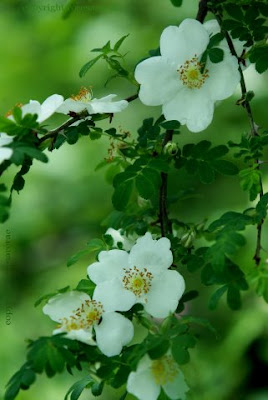
This tall rose, maturing to a height of 9 feet (3 metres tall) with the same width side ways make a great interplanting candidate for a flowering hedge. She is a once bloomer and start opening her off white, strong fragrant blooms early in mid spring

This is a species or wild rose with a neat elegant up right growth yet not as stiff as those from Hybrid Teas and best of all its very disease resistant and carefree.


________________________________________________________________________Copyright © Rosesarerae All Rights Reserved All the contents in this blog are copyright protected and digitally traceable.

Sericea Pteracantha


Thorns or prickles from rose bushes comes in all shapes and sizes. Those from this rosa Sericea Pteracanta bush actually look interestingly decorative.

The reddish thorns or prickles on the new growth cane of Sericea Pteracantha rose shrub on the right looked very similar to many other thorns or prickles from other rose bushes but as the canes gets older, the thorns expanded into a wing shape.


This is another rose shrub which makes a good candidate for hedging.


________________________________________________________________________Copyright © Rosesarerae All Rights Reserved All the contents in this blog are copyright protected and digitally traceable.

Saturday, 9 May 2009

Flowering hedge - Part 1

Hedges are very important for windy gardens because they act as a wind breaker and are much more efficient for breaking and dispersing the back force of the wind compared to hard structures such as walls or wooden fence.

While roses shrubs demands good air circulation, they really do appreciate some protection from gusty strong wind especially the bitter cold wind in winter months.

When I first created the garden, my first vision was to achieve a formal look, so I planted rows and rows of evergreen Buxus Sempevirens, Mahonia, Leyland Cyprus and Prunus laurocerasus for creating a little bit of privacy because they remain green during winter months, and they are are also the defining back bone to the overall garden design.

The buxus and the Mahonia is a slow grower but the other 2 are fast growing tall hedging plants which requires constant trimming. After the third year, the garden was nicely green but also looking very heavy and dark especially on cloudy grey days.

Later on, I decided hedges shouldn't be boring, so I began planting a second layer of seasonal flowering plants, decidous and evergreen mix together infront of the evergreen hedge. This immediately lightened up the dark corners of the overly green garden.

Chemomeles or flowering quince (picture above) look stunning when interplanted in the view line of the Mahonia (picture below).

After a couple of years trying to straighten, bending and controlling plants growth, I realised that every single plant have got their own characteristic and personality, that all efforts from my part to make them grow according to my ideals resulted in making them gawky awkward and very unnatural looking.

I have since left them alone to do their own things. Afterall, my garden setting is located next to a natural woodland. Its only natural that I go along with the surrounding wilderness and not spend too much time getting bothered by unruly growth from plants that's overzealously trying to invade its neighbouring plants. I planted this red maple leaf tree thinking that one day I would like to plant a white rambling rose to scramble over it. At the moment the golden yellow Kerria Japonica seemed happy in partnership to the red leaves.
Syringa Vulgaris stood out beautifully infront of the airy pink Tamarisk.


Spirea can lighten up dark corners efficiently but it would thrive even better when grown in full sun. This shrub can grow up to about 5 feet tall (1.5 metre) It's not evergreen but a pile of brown twigs in winter.
In my effort to have continuously colours and bloom every day for the season, I've planted and still planting different varieties of flowering, fruiting plants, tall species rose and wild rose shrubs amongst the evergreen hedge to create different interests for the 4 seasons.


Most of those roses I've chosen for the garden hedge produces beautiful rose hips in autumn.

Interplanting the living fence with tall rose shrubs did the trick and provide abundance of colours, scents and excitement to the outdoor living, but it is in winter months that I really feel the satisfaction watching the birds enjoying the rose hips as part of their meals.

The vicious rose thorns along the hedges also make the trespassers think twice before slipping through.


________________________________________________________________________Copyright © Rosesarerae All Rights Reserved All the contents in this blog are copyright protected and digitally traceable.

Friday, 8 May 2009

Once you have them, you'll always have them

Ajuga Reptans, nice blue flowers in mid spring but be very very careful where you want to have them in your garden. This is a very tough, easy to grow plants that spread so easily through runners that one tiny pot from the nursery can spread out to cover an area of one square metre within one season. I planted them in an area where I was sure they won't be able to escape due to concrete edgings but suddenly this spring my composting area is a blue carpet of ajuga reptans blue. I must have accidently dump some tiny ajuga reptan plants onto the compost heaps and they took off from there.
I also transplanted some plants from the same area to another part of the garden and now that area is also blue with ajuga reptans. They seem to be able to thrive whether in shade of sun.


Aqulegia, once you have them, you will always have them, except they tend to sprout out in places least expected.


Black bird, once they've made their nest in the garden, they'll always be there to sing you their sweet love songs day and night.


As long as you have friends with good humour, they will continue bringing you gifts that will scare away the birds. Thanks Kat. I'm not sure if I should use it for bird feeder or bird bath? LOL


Wood's strawberries, once you've got them, you can hardly control them.


________________________________________________________________________Copyright © Rosesarerae All Rights Reserved All the contents in this blog are copyright protected and digitally traceable.

Thursday, 7 May 2009

Spring into real Spring

Where I am located, the month of May is really one of the most beautiful time of the year. This is the time when every single living plants are sprouting and growing in a hurry to set blooms for the month of June. July will be too hot for most flowering plants and everything including me will just turned limp with the heat and go into short dormancy period until the temperature come down again.

Everything is prolific right now that I even have onions growing in my kitchen. Even though they are in a special breathable terracotta container and practically in the dark, that doesn't stop them from sprouting and turning themselves into spring onion!

(left) ornamental garden alium, not edible but also in the onion family.


We call this one Bärlauch, pronounce as bear-lauch with silent C.

Other people call it Allium ursinum or wild garlic. The picture here is showing them already in their flowering stage.

They can be found growing in the undergrowth of damp, cool and shaded woodlands.

I have quite a patch of them growing at the edge of my woodland garden. The leaves smells very similar like garlic but eating it doesn't make your breath smell like you have eaten garlic bread or garlic chips. I'm not kidding, there is such thing as garlic chips. I've never used it in the garden but Cyndy used them to keep the deers from eating her roses. (By the way, Cyndy, its wonderful to see you here. My bareroot Darlow Enigma has gotten to 3 feet tall! )

In early spring, when the "bärlauch" first unfurl their young leaves, we usually collect the very fresh young leaves and prepare them into bärlauch pesto.

It is very similar to making basil pesto, pine nuts and mixed with extra virgin olive oil and eaten with spagetti or any kind of pasta with grated Italian cheese such as grana or parmigiano.

I will start adding recipes to my other blog, so you all can try my cuisine. Very simple and straight forward cooking style.

I am not a couch potato, but I love potatoes. I have planted a basketful of potatoes which sprouted out during late winter, Potato sprouting: Signs of Spring
but every year in autumn, I always forgotten to harvest my own home grown potatoes!

Since I eat a lot of potatoes, boiled, mash, wedges or hash brown which is called rösti over here, my kitchen is never without potatoes. Last week, I bought some more but since the days are getting longer and brighter, those potatoes, even though they are in a special basket that blocked lights, they still turned green and sprouting little growth from the eye buds. When they have turned green, that means they are not more good for eating, due to the high alkaloid solanine contents, which is toxic and can cause gastrointestinal discomfort or even heart damages if ingested excessively. That's unbelievable isn't it? I mean food that give us strength and energy can also kill us!

With so much rain last month, the weeds and the grasses are growing so fast. They have reached up to my waist level. Its like walking in a grassy safari somewhere in the exotic land, but I am still in my own garden reality and I can't see those short rose bushes at the moment. The dandelion are at their peak. Some are already making their fluffy white seed heads. Soon there will be thousands dandelion seed flying around in the air. I have given up trying to eliminate them from the garden. They are all over the place in my neighbourhood.

Sometimes, I wish I have a pet goat or sheep to eat up all the grass and the weeds....

Azalea is working hard making buds...


The Tireless rose or Unermüdliche first bloom. O joy...my rose season is here!


________________________________________________________________________Copyright © Rosesarerae All Rights Reserved All the contents in this blog are copyright protected and digitally traceable.